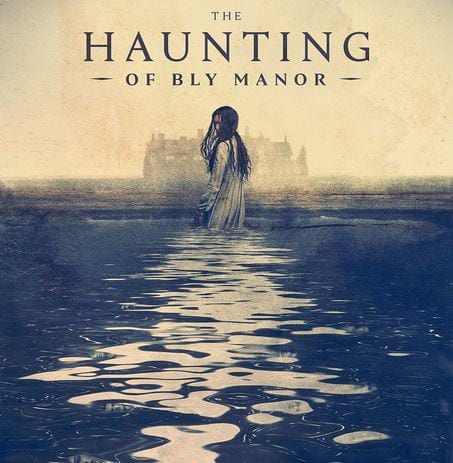
Heads up. This contains spoilers to The Haunting of Bly Manor
It’s always interesting remembering dramatic television in my childhood in the early 2000s, with mostly underwhelming content compared to now. Back then, the shows I did watch were appointment television or at least next day after I recorded them on VHS tapes. I would have barely comprehended the concept of streaming an entire season on my television as basically all of us would have. It’s all to say that with so much content now, it’s hard at times to literally remember what shows one is watching. I’m not sure if many shows I’ve watched are cancelled, limited series or if I’m unknowingly waiting on another season. When I look back at this Platinum Age of television of the past decade, few shows made the mark on me like The Haunting of Hill House, the first season of Mike Flanagan’s The Haunting anthology series. The plot acutely threw melting salt on some of my own personal experiences coming from a large family, so I likely give it more credit than it deserves, but nonetheless, when the second season was announced, I largely forgot about it. I forgot because amidst the pandemic, I have no idea if half the shows I watch will come back so I’ve gotten used to putting new, terrific television behind me quickly, knowing that whatever I enjoyed over the past few months may never see the screen again. Fortunately, I was delighted to see that the second season of The Haunting, The Haunting of Bly Manor, come up on Netflix, a welcome, familiar sight in an increasingly depressing television slate.
Full disclosure, I’m only five episodes out of nine into the The Haunting of Bly Manor, which is based on the classic novella, The Turn of the Screw, which fortunately I’m not familiar with. Creator Mike Flanagan, renowned for his low budget, high quality horror films, somehow manages in both seasons of this show to make the viewer believe some twist is on the horizon, despite the journey being the main focus. I wasn’t familiar with the source material of the first season either, but given how Flanagan adapted two different works in such similar ways, I’m struck by how succinctly Bly Manor captures the same unease, not outright terror, that Hill House does. Another show I’ve watched extensively, American Horror Story, albeit an entirely different drama, almost always seems to miss the mark in finding the subtlety of the horrific events in the story. Nothing is a slow burn on that show, it’s all forced into your mouth and maybe it’s just not my style, I just always have trouble being truly compelled by that show in the same way The Haunting leaves me wanting more episodes. Bly takes the realistic horror and tragedy we can all grasp and injects succinct tinges of supernatural elements to weave the complex threads of each character’s given situation.
The story’s main character, Danielle “Dani” Clayton, played by the hauntingly talented Victoria Pedretti, takes a job in England to be an au pair for two young children whose parents died recently. She’s an American and in her interview with Henry Thomas’ character, the kid’s uncle, both parties inquire right off the bat as to the baggage each situation carries. Thomas is cagey about the situation, obviously having at least inklings about the ghostly nature of Bly Manor, the children’s home. Dani similarly keeps her tragic past to herself. Dani sees a vision of man in every mirror that terrifies her each time, clearly the ghost of some grim incident in her life and always a welcome scare to viewers, even through the first episode when we know it’s coming. It serves as a visual constant for me at least, of the consistently, gnawing thoughts that plague most people no matter how hard they attempt to ignore them. In many ways, the subtle horror of Flanagan’s style, seeks to visually represent hyperbolic versions of grievous circumstances of characters to draw parallels to the obviously less visual, but in some ways worse, psychological dread we experience in the real world. No, we don’t live in a haunted house like Bly Manor, however we also struggle to escape the events and people we regret.
As Dani learns, the former au pair, Rebecca Jessel, killed herself only a year earlier and upon arriving at the manor, the children, Miles and Flora, appear odd, but otherwise pleasant and clearly have a fondness for their former nanny. Flora, the daughter, obsesses over her small dolls clearly pulling some strings with the apparent entities in the house. As with season one of this show, I’m constantly looking in the background for ghostly images, which are delightfully frightful when noticed. As Dani gets to know the children, they seem more and more off, something she compartmentalizes in an effort to keep her sanity with the ghosts she sees from the house, along with her own self-inflicted apparitions. T’Nia Miller plays Hannah, the housekeeper who along with Rahul Kohli, the cook, Owen, and Amelia Eve, the gardener, Jamie, create one happy little family of sorts, that make every effort to have playful, coy interactions with the children. Hannah obviously has a larger story, one we come to understand later and as I noticed, lives on the property where Owen and Jamie do not. Despite the ensuing events, with a ghostly evil man appearing, who turns out to be a former associate of the uncle, Hannah seems constantly at peace with the increasingly erratic events and particularly, the increasingly concerning behavior of Miles. I’m not sure who’s teaching kids acting these days because whoever is, they keep finding incredible kids, particularly Miles who at times seems outwardly menacing towards Dani, Hannah and Flora, then perfectly unsure of himself and innocent like any thoughtful ten year old boy. This kid so acutely captures the abject confusion of being a boy that age, especially one without a man guiding him.
With the story unfolding, we’re learning of an affair between Peter Quint, the uncle’s business partner and the former au pair, Rebecca. As Quint’s potentially ghostly appearances at the manor seem menacing, we learn his true nature as a conniving twit, angry at his paltry status in life and determined to make himself richer at the expense of the family. Every episode so far, peeled back layers of each character to show us what’s happening inside of them at the moment or how they got to their current run of form in the present 1980s, when the story takes place. Oliver Jackson-Cohen, who returns from the first season, comes off most recently as the invisible man in the same titled movie from earlier this year. He’s absolutely terrifying as the psychotically controlling husband to Elizabeth Moss in that movie and so brazenly encompasses evil as that character. In Bly, Jackson-Cohen is given a chance to charm as the devil would, seducing Rebecca and developing a playful rapport with the children. We first see him as what we think is a ghost, though he’s really only missing, assumed to have defrauded the uncle and fled after Rebecca died. He’s clearly nefarious and his profile as the characters see him around the house is pure menace. His actual character as we see him in flashbacks, projects a dapper Scot, handsome, unassuming, but confident and poised. This gives him ample opportunities to thread himself into the household, worming his way to Rebecca, even with Hannah suspicious the entire time and truly reveal the evil behind his rakish veneer. Jackson-Cohen as an actor gets to really cook in this role. Where I saw the inklings in The Invisible Man of the dynamic attributes of his to play that beautiful devil Quint. He had limited chances in Season 1, playing a tortured drug addict, so it’s nice to see this progression from him. Ultimately, I know his role will be delved into as his larger role in the characters’ stories has been revealed.
In an effort not to completely spoil this, I’ll tread carefully when it comes to ghosts, because like many shows, especially the best seasons of American Horror Story, which are Murder House, Roanoke and 1984, the tortured lingering soul angle never gets old when done properly. People die in the house at Bly, don’t leave and just like in the AHS seasons, they still affect the living who end up their presence. I’m fascinated with this concept of truly evil people who remain that are trapped along with thoroughly decent people as well. Bly, of course, relies on this technique, asking the viewer the age old horror question of who really is alive and why. Dani, because of her past, escapes to England in an effort to find an excuse for living. Her investment is the children, however her underlying sorrow begs us to ask what about her makes her alive. It becomes the care she develops for the kids and her relationships as she bonds with the house staff after we learn of her trauma. Since I’m just learning who’s alive and dead at the house, it’s completely engrossing to imagine the decisions and actions of souls stuck in the world of the living, trapped at a singular location. Bly is trending towards exploring that more thoroughly and more subtly than say Murder House. In that first season of AHS, the original family does their due diligence to theatrically frighten a new family away from the malevolent forces of the house. The ghosts of Bly seem protective as well, albeit in a more spooky manner. The added wrinkle of apparently alive children brings the innocence factor into more stark focus because the children know they live with ghosts. Flora, in an absolutely fire scene, sings to herself as she’s hidden in a game of hide and seek, only to be joined in song by a ghostly figure behind her that she abruptly chastises to be quiet, to which the ghost obliges. It’s a genuinely hilarious moment, one that takes a common horror trope and turns it on its head. While there’s added layers to who the kids really are that I won’t go into, they see their home in some ways as a haven for those souls and while Dani and Hannah are the adults, the kids show time and again that they really control what’s happening to the extent of their capability. Where children often struggle to reveal their knowledge of sinister forces in many horror films, these kids, as they more or less illustrate in a play put on for the house staff, pull the strings of the forces in the house and seem to be managing things pretty well. The Lady of the Lake ghost is a wild card for them, proving to be the most difficult of Flora’s dolls to manage, but that ghost also appears benevolent towards them and the other good souls of the house. It’s all very interesting and I look forward to the last few episodes to tie everything together. I genuinely have very little idea of what will happen because of these genre bending story lines of Flanagan. His eye towards the macabre dominates his films and this adapted series, but it’s the subversiveness to the genre in his film-making style and character studies that while simple in appearance compel viewers to ask rooted questions about the horrors of their own lives.
 Bo's Gamut